
Rosewell Music
Institute Thailand
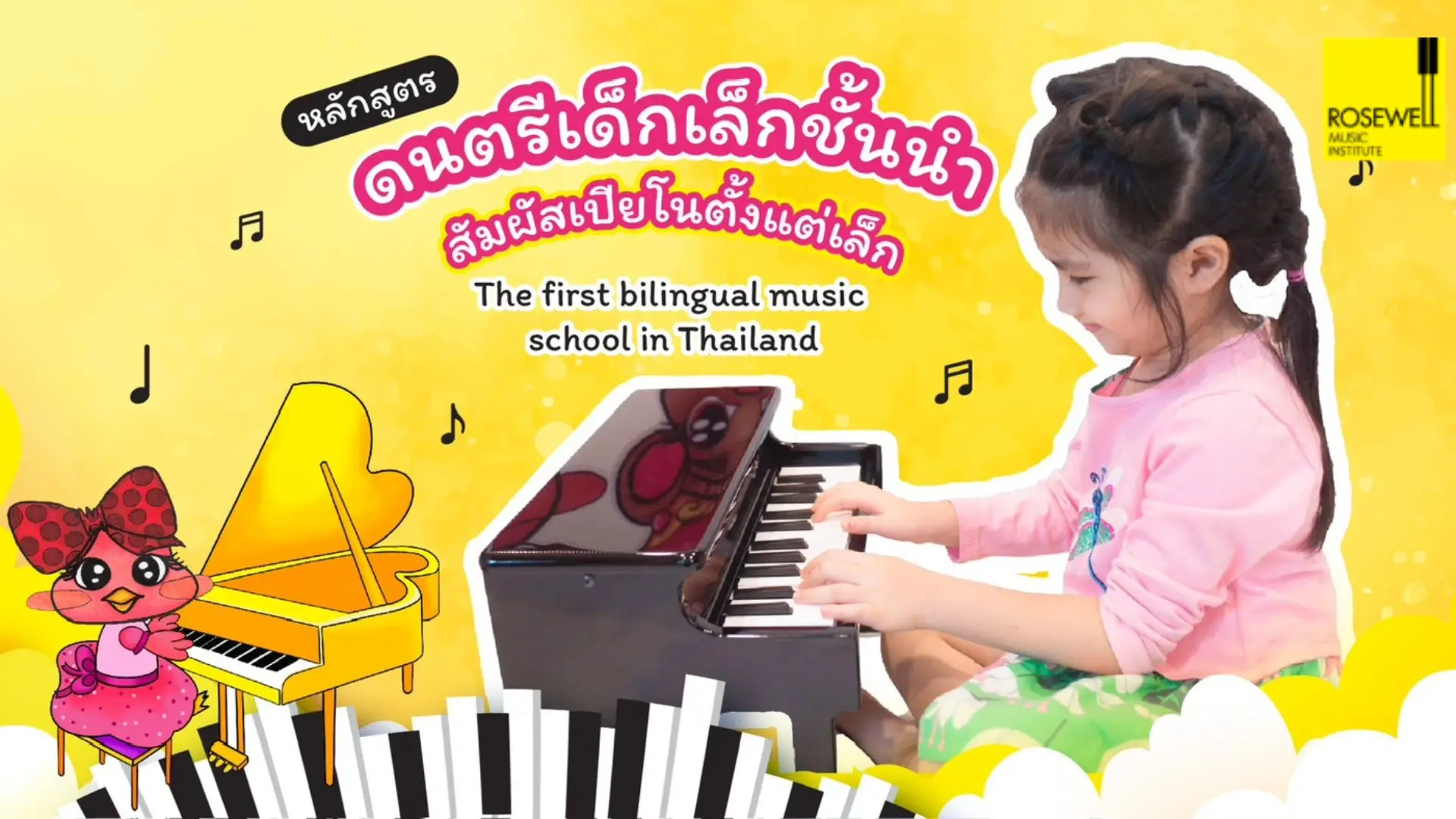
The First Bilingual
Music Institute for Children.




FAQ
Rosewell’s curriculum has been carefully developed by expert teachers with over 20 years of experience in music education and exam preparation.
It is highly recommended by child development specialists to begin music education at an early age.
- Children can start real music learning from as young as 2 years old.
- Lessons are customized to each child, ensuring engagement and enjoyment without boredom.
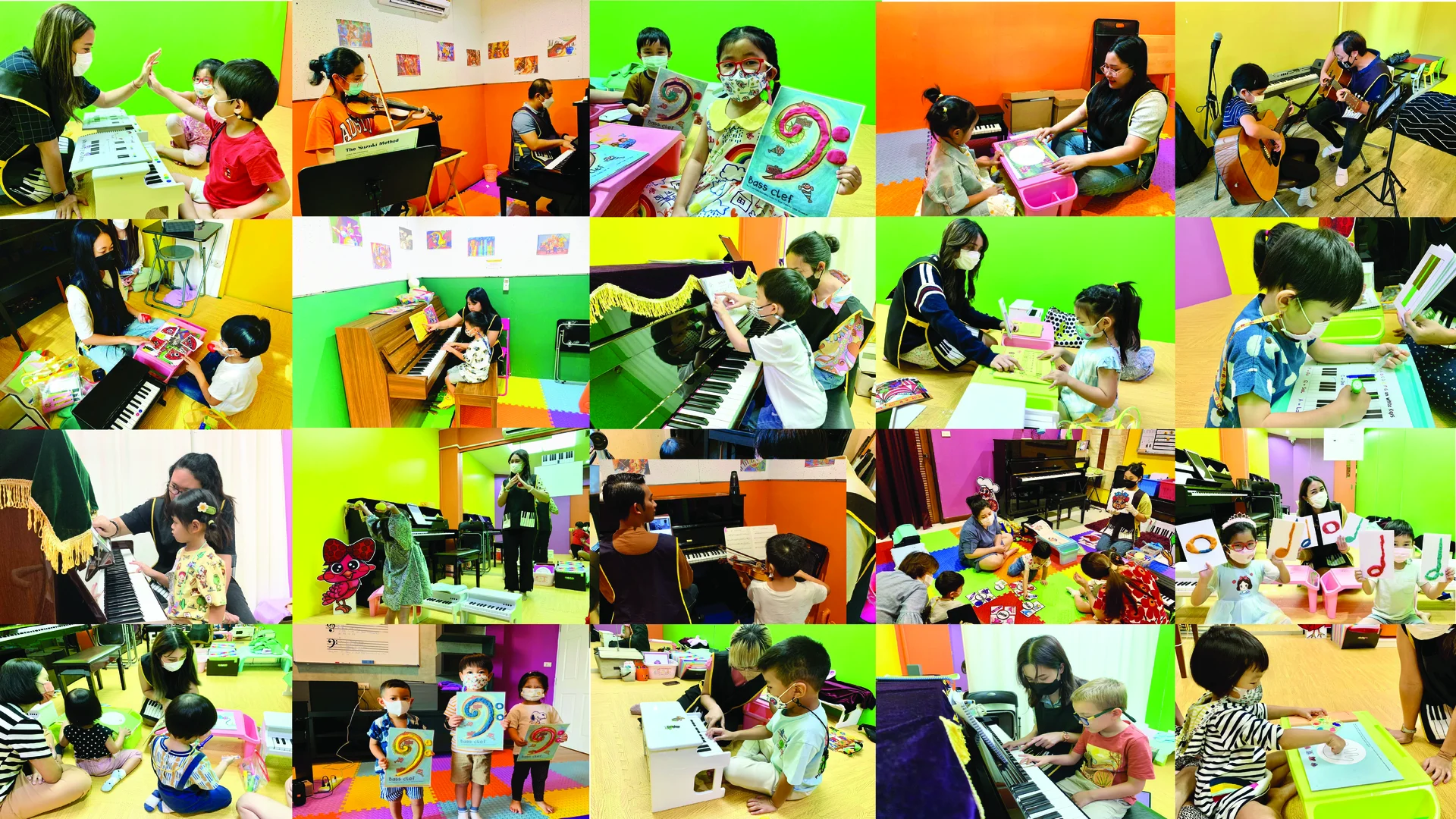
- We emphasize Play-Based Learning, combining music activities with hands-on piano experience.
- Learning goes beyond textbooks — children actively explore music instead of sitting at the piano alone.
Courses Offered at Rosewell
- Pre-Piano (Short-Term Piano Course)
- RMM (Early Childhood Music Program)
- RMA (Children’s Piano Program)
- Piano
- PREP (Exam Preparation Courses)
- Vocal
- Drums
- Violin
- Music Theory
- General music courses: 8 lessons per course
- Piano courses: 12 lessons per course
For piano lessons, we divide teachers into two specializations:
- Early Childhood Piano Teachers
- Specialists in teaching young children
- Trained in child psychology and early childhood education
- Senior Piano Teachers
- Experts in advanced piano instruction
- Experienced in exam preparation and competitions
Rosewell teachers include both Thai and International instructors, as we are a bilingual music school.
Most of our teachers are graduates from recognized music colleges.
- Short-Term Piano Course
- After 16 lessons, children can play Hot Cross Buns
- Music & Movement (Early Childhood Music Program)
- After 24 lessons, children can play simple songs (usually with one hand)
- Music Adventure (Children’s Piano Program)
- After 24 lessons, children can play songs with both hands
- Other Instruments
- Typically take 4–6 months to play complete songs
- Progress depends on the student’s discipline and parental support at home
Yes. Parents may inform the school in advance.
- 8-lesson courses: up to 2 leave sessions
- 12-lesson courses: up to 3 leave sessions
In case of illness, a medical certificate can be provided and the absence will not be counted.
Make-up classes can be arranged within the same week to avoid using leave sessions.
To achieve meaningful progress in music, parents play an important role in helping children build discipline and responsibility.
- Begin practice at home with 15 minutes per day, gradually increasing over time.
- Consistent repetition helps children develop natural practice habits.
- Parents should help children understand why music is important and set clear goals.
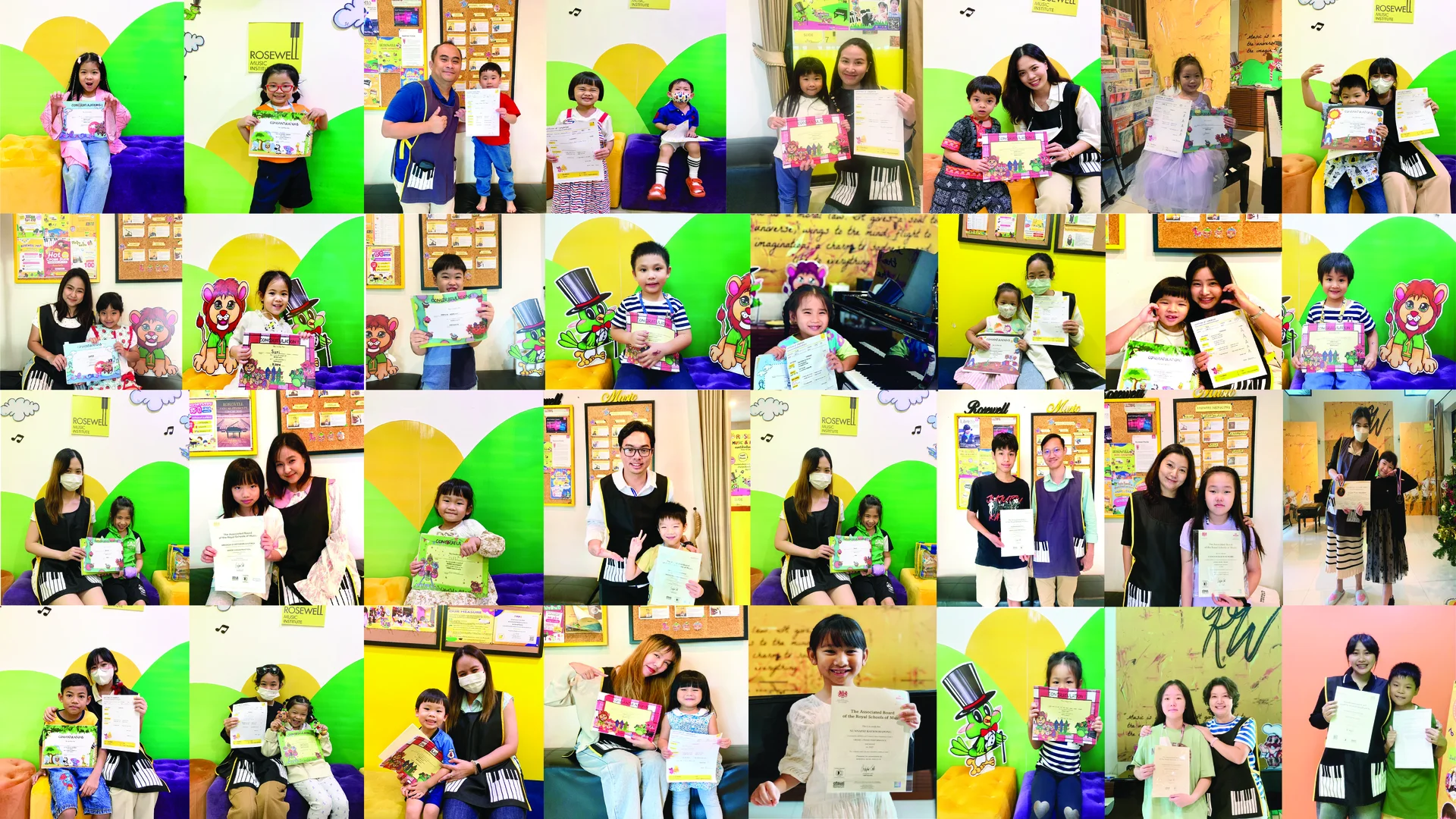
We strongly recommend music exams, as they provide recognized certifications that can be used internationally.
Music qualifications can support future education, provide opportunities for part-time income, and even open paths to teaching music.
Discipline and consistency are key factors in achieving long-term success — not only in music, but in all areas of life.
- During the first 3 months, when note reading is not yet required, having an instrument at home is optional.
- Once children start begin playing notes, having an instrument at home is highly recommended.
- Rosewell offers child-sized pianos suitable for ages 2–6, with key weight similar to upright pianos.
- For other instruments, students should have their own instrument from the beginning.
BENEFITS OF MUSIC EDUCATION
Many research studies have shown that learning music helps improve brain development, especially in areas related to memory, problem-solving, and analytical thinking.
Playing music requires children to focus on listening to sounds, following rhythm, and coordinating hand movements. These activities help children develop better concentration and attention.
BENEFITS OF LEARNING PIANO AT YOUNG AGE
Learning piano helps develop:
- Concentration
- Memory
- Hand–brain coordination
These skills support children’s overall learning development.
Music training helps develop thinking skills, memory, and analytical abilities, which can positively impact learning in other academic subjects
Music education helps children practice planning, memory, self-control, and problem solving, which are key components of Executive Function.
Yes. When children successfully perform a piece of music or participate in a performance, they feel proud of their achievements.
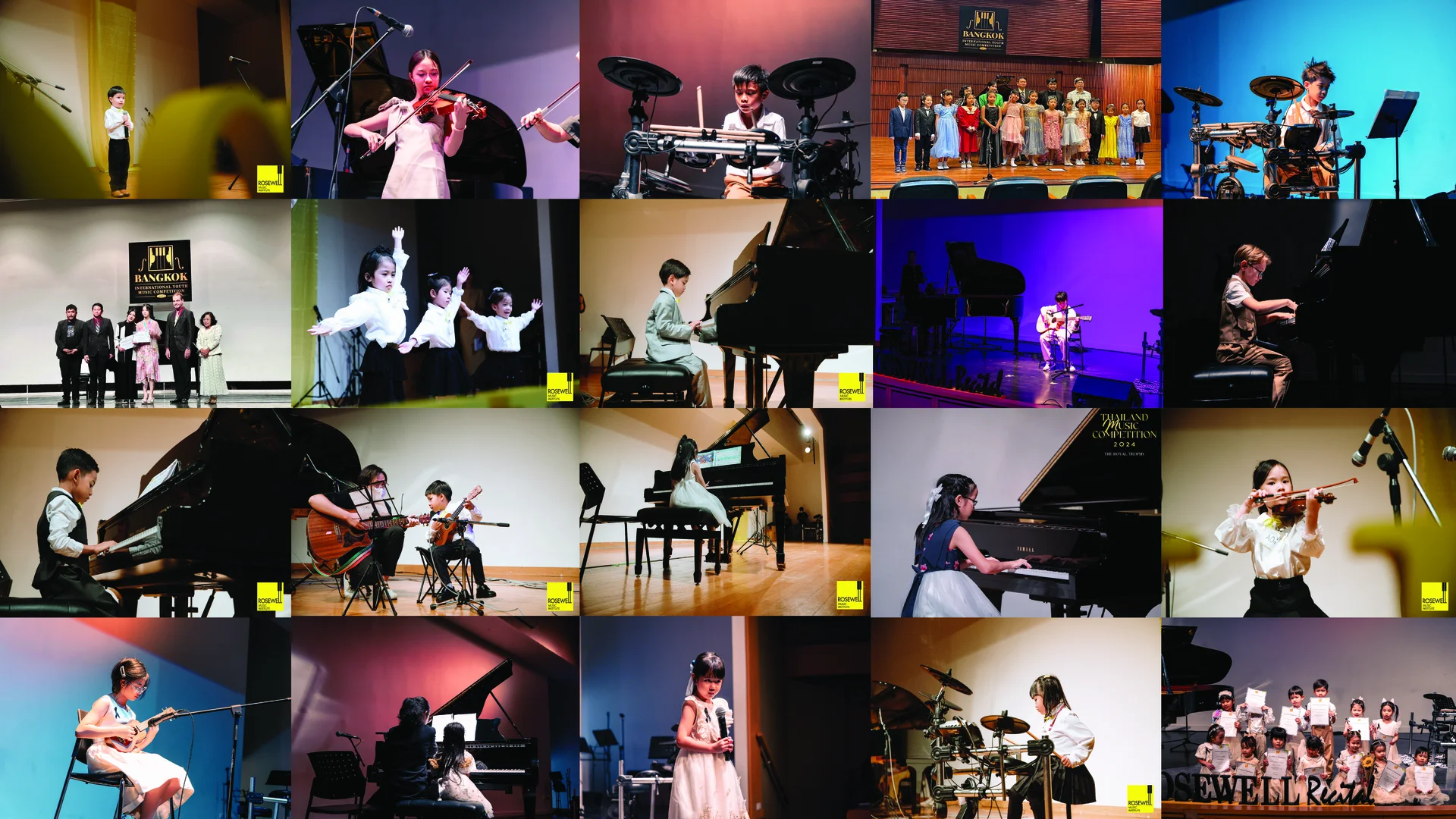
At Rosewell Music Institute, every branch organizes Mini Concerts and an Annual Concert each year to give students the opportunity to perform and build confidence on stage.
Music helps develop IQ through analytical thinking and problem-solving.
At the same time, it develops EQ by allowing children to express emotions through music.
Many international schools believe that music helps develop important skills such as:
- Concentration
- Creativity
- Teamwork
Children learn to distinguish different sounds, rhythms, and musical notes, which helps strengthen their listening abilities.
Regular music practice teaches children about responsibility, consistency, and discipline, which are valuable life skills.
CHOOSING A MUSIC SCHOOL
Parents should consider:
- A curriculum appropriate for the child’s age
- Qualified and experienced teachers
- A positive and engaging learning environment
- Clear learning goals for students
Parents should look at:
- The teaching curriculum
- Fun and engaging teaching methods
- The experience of the instructors
It is best to choose a school that has specialized programs for young children and focuses on fun, engaging learning.
At Rosewell Music Institute, the curriculum is carefully designed to match each child’s developmental stage.
A good piano teacher for children should have experience teaching young students and use teaching methods that are patient, engaging, and easy for children to understand.
- Group lessons help children develop social skills and teamwork.
- Private lessons focus more on individual musical development.
Generally, 1–2 lessons per week is considered appropriate for children.
For young children, in-person lessons are usually more effective because they allow direct interaction with the teacher.
It is recommended to have a piano or keyboard at home so children can practice regularly once they start learning notes.
Young children should practice about 10–20 minutes per day, and gradually increase practice time as they grow older.
ROSEWELL MUSIC INSTITUTE BRANCH LOCATIONS
Rosewell Music Institute Ladprao Branch is located in Ladprao Soi 41.
Directions:
Enter the soi for about 700 meters, then turn left at Soi 6-9. Continue straight for about 100 meters, and the school will be on the left side.
Parking is available inside the house or along the white wall.
Line Official: @rosewellmusic
Rosewell Music Institute Ramintra Branch is located in Kris Town Village on Thairaman Road, house number 327/26.
The house is on the corner opposite the lawn field.
Please inform the security that you are visiting the music institute.
Parking is available inside or around the house.
Line Official: @rosewellramintra
Rosewell Music Institute Ratchaphruek Branch is located near Ratchaphruek Road, Taling Chan District, Bangkok.
The branch offers a full range of music programs including:
- Piano
• Singing
• Early Childhood Music Programs
The curriculum follows international standards.
For the exact location, please contact:
Line Official: @rosewellrcp
Rosewell Music Institute Paradise Park Branch is located inside Paradise Park Shopping Mall, Srinakarin Road, Nong Bon, Prawet, Bangkok.
This branch offers complete music programs for children and all ages.
Line Official: @rosewellparadise
Rosewell Music Institute Petchkasem 81 Branch is located at Siri Avenue Project, Petchkasem 81.
This branch offers a full range of music programs.
Line Official: @rosewellpetchkasem
Yes. Music helps children channel their energy while also developing concentration.
Yes. Music lessons can actually help improve focus and attention over time.
Children may need time to adjust. Creating a fun and supportive learning environment helps them feel more comfortable.
Parents can turn practice into fun activities or games, start with short practice sessions, and gradually increase practice time. This also helps children develop responsibility and discipline.
Children can start with beginner programs such as Music & Movement or Pre-Piano classes.
No prior experience is required. Children can start learning music from the beginning.
Most children can play simple songs within about 4–6 months of learning.
Both Trinity College London and ABRSM are internationally recognized music examination systems. Parents can choose according to the school’s teaching pathway.
Yes. Teachers will evaluate each student before recommending them for music examinations or competitions.
Preparing students for exams and competitions is one of the institute’s important goals, helping students develop their skills, build confidence, and potentially pursue music professionally in the future.